Testicular Cancer
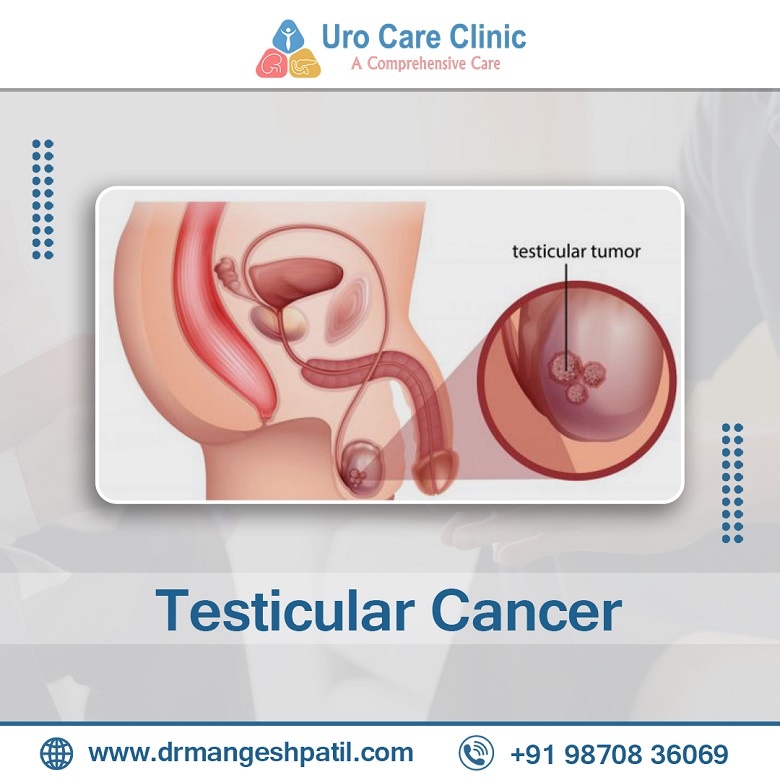
Testicular cancer is the growth of abnormal cells in the tissue of a testicle. It is most common in men between 20 to 35.
The development of cancerous cells in both testicles can occur but is very rare.
What are the types of testicular cancer?
There are two primary types of testicular cancers based on which germ cells cancer arises these are seminoma and non-seminoma.
Seminoma arises from germ cells, grows slowly, and stays. 30 to 40 per cent of testicular cancers are seminomas.
Non-seminoma evolves from more mature germ cells. These tend to be more aggressive tumours.
Causes
Factors that may increase a man’s risk of developing testicular cancer are:
• Abnormal testicle development
• Exposure to certain chemicals
• Family history of testicular cancer
• HIV infection
• History of an undescended testicle (one or both testicles fail to move into the scrotum before birth)
• Klinefelter syndrome
• Infertility
• Tobacco use
• Down syndrome
Symptoms:
Most of them will have painless scrotal swelling.
Other symptoms may include:
• Discomfort or pain in the testicle, or a feeling of heaviness in the scrotum
• Pain in the back or lower abdomen
• Enlarged testicle or a change in the way it feels
• An excess amount of breast tissue (gynecomastia),
however, adolescent gynecomastia can occur normally in adolescent boys who may not have testicular cancer
• Lump or swelling in either testicle
Treatment
Treatment depends on the:
• Type of testicular tumour
• Stage of the tumour
Three types of treatment can be used.
• Surgery: Involved testicle removed in surgery. It is known as orchiectomy.
• Radiation therapy: High-dose of rays or other high-energy rays may be used after surgery to prevent the tumour from recurrence.
Radiation therapy is usually only used for treating seminomas.
• Chemotherapy: This is for metastatic testicular cancer. This treatment has greatly improved survival for people with both seminomas and nonseminomas.