Bladder Cancer: Risk Factors
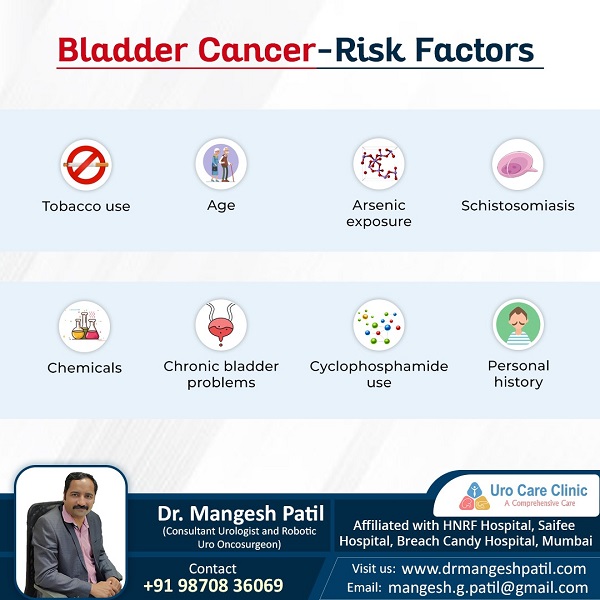
Bladder cancer occurs when cells of the bladder grow abnormally. The most common risk factors of bladder cancer are age, race, gender, exposure to certain chemicals, and having a family history of the disease etc.
Let’s have a look at the most common risk factors of bladder cancer:
1. Smoking:
Smokers have twice the risk of getting cancer as compared to non-smokers. It is one of the major risk factors for bladder cancer. During smoking, some cancer-causing chemicals present in cigarettes enter into our bloodstream through the lungs. These chemicals are then filtered by the kidneys and get deposited into the urine. As bladder holds urine, the carcinogens in the urine can damage the cells on the bladder wall.
Quitting tobacco can lower the risk of bladder cancer.
2.Chemical Exposure
Frequent exposure to certain chemicals used in the textile, rubber, leather, dye, paint, and print industries; some naturally occurring chemicals; and chemicals called aromatic amines and others can also increase the risk of bladder cancer.
3. Genetics:
Family History of Bladder Cancer
The risk of bladder cancer doubles, if anyone in the family has bladder cancer.
Age
Older people have a greater risk of bladder cancer.
Gender
Men have a greater risk of bladder cancer as compared to women.
4.Previous treatment: Chemotherapy or Radiation
Drugs used in chemotherapy can increase the long-term risk of developing bladder cancer. Also, if radiation enters the pelvis, the risk of developing bladder tumours increases.
5.Arsenic: Drinking water contaminated with arsenic is also a risk factor for bladder cancer.
6. Low fluid consumption:Low fluid consumption can increase the risk of bladder cancer, as chemicals are left in the bladder for a longer time.
Other conditions
7.Chronic bladder infections and irritation: Urinary problems like urinary infections, kidney and bladder stones, and other causes of bladder irritation increase risk of bladder cancer.
8.Bladder defects from birth: If the connection between the belly button does not disappear after birth, it may become cancerous. In another birth defect that can increase bladder cancer risk is the fusion of the bladder and abdominal wall together, leaving the inner lining of the bladder exposed to other areas of the body. People who have or had this condition are at a higher risk for bladder cancer. Speak to the best urologist near you, if you have this condition.
By taking some preventive measures, you can reduce your chances of developing bladder cancer.