
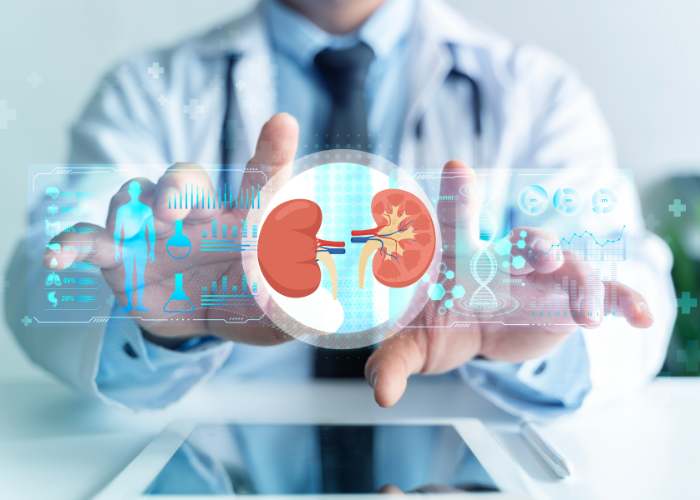
Bladder stones and kidney stones are both hard mineral deposits that develop within the urinary system. However, they form in different organs and are often linked to different causes. Kidney stones develop in one or both kidneys, while bladder stones usually form when the bladder does not empty completely and the remaining urine becomes concentrated.
Understanding this difference is important because symptoms such as severe pain, blood in the urine, difficulty urinating, fever, and recurring urinary tract infections require medical attention. If you are searching for the best urologist in Mumbai, choose a qualified specialist who can locate the stone, identify any infection or blockage, and recommend treatment based on the findings.
Kidney stones are solid deposits made from minerals and salts found in urine. They develop when urine becomes concentrated enough for these substances to crystallise and collect.
Some kidney stones are small and pass without causing noticeable symptoms. Others move from the kidney into the ureter, which carries urine to the bladder. A stone lodged in the ureter can obstruct urine flow and cause intense pain.
Untreated kidney stones may result in blood in the urine, urinary infections, severe pain, or reduced kidney function. The best urologist in Mumbai will consider the stone’s size, location, composition, symptoms, and effect on urinary drainage before suggesting treatment.
Bladder stones form inside the bladder, most commonly when it does not empty fully. Minerals present in the remaining urine gradually collect and harden.
Incomplete bladder emptying may be associated with:
• An enlarged prostate
• Nerve-related bladder problems
• Bladder prolapse
• Bladder diverticula
• Severe constipation
• Urinary obstruction
Occasionally, a kidney stone travels through the ureter and reaches the bladder. It will often leave the body during urination, but it may remain and grow if the bladder cannot empty properly.
Small bladder stones may pass naturally. Larger stones commonly require medical removal. Treating the underlying cause of incomplete bladder emptying is equally important because bladder stones may return if the original problem remains.
Location
• Kidney stones: Develop in the kidneys and may travel into the ureters.
• Bladder stones: Develop or remain inside the bladder.
Typical Cause
• Kidney stones: Usually form when minerals and salts become highly concentrated in urine.
• Bladder stones: Commonly form when urine remains in a bladder that cannot empty completely.
Pain Pattern
• Kidney stones: May cause sharp pain that comes and goes in waves. The pain can affect the back, side, lower abdomen, or groin.
• Bladder stones: More often cause lower abdominal discomfort, burning during urination, interrupted urine flow, or difficulty emptying the bladder.
Associated Symptoms
Both conditions can cause blood in the urine, painful urination, urinary urgency, and infection. Kidney stones may also cause nausea and vomiting, particularly when a stone moves through the ureter. Bladder stones are more likely to cause frequent urination, recurring infections, and stop-start urine flow.
Because the symptoms can overlap, diagnostic testing is needed to confirm the type and location of the stone.
A urologist may review your symptoms, medical history, medications, previous infections, and history of urinary stones. Tests can include:
• Urinalysis: Checks for blood, crystals, and signs of infection.
• Blood tests: Measure kidney function and certain mineral levels.
• Ultrasound: Produces images of the kidneys and bladder.
• CT scan: Identifies a stone’s location, size, and possible obstruction.
• Cystoscopy: Uses a thin camera to examine the bladder.
• Stone analysis: Determines the composition of a passed or removed stone.
The required tests will depend on your symptoms, medical history, and the suspected location of the stone.
Small kidney stones may pass naturally with appropriate fluid intake, monitoring, and prescribed pain relief. Larger stones or stones obstructing urine flow may require:
• Shock-wave lithotripsy
• Ureteroscopy
• Percutaneous stone removal
The most suitable treatment depends on the stone’s size, type, position, symptoms, and whether it is causing an infection or urinary obstruction.
Larger bladder stones are often broken into smaller pieces and removed through a procedure called cystolitholapaxy. This procedure is performed through the urethra. Surgery may be required in some cases, particularly when the stone is large or another condition must be treated at the same time.
Treatment should also address the reason the bladder is not emptying properly.
Seek immediate medical attention if you experience:
• Severe or persistent pain in the abdomen, back, side, or groin
• Fever, chills, weakness, or symptoms of a urinary infection
• An inability to urinate or passing very little urine
• Visible blood in the urine
• Persistent vomiting or dehydration
• Pain during pregnancy
• Pain with one functioning kidney or existing kidney disease
A urinary stone accompanied by infection or obstruction can require urgent treatment.
Drinking sufficient water helps keep urine diluted, but prevention should be based on the type and cause of the stone.
Preventing recurring kidney stones may involve:
• Analysing a previously passed stone
• Urine and blood testing
• Dietary adjustments
• Increasing fluid intake
• Medication for specific abnormalities
Preventing bladder stones usually requires treatment of incomplete bladder emptying. This might involve managing an enlarged prostate, addressing nerve-related bladder dysfunction, correcting a prolapse, or treating another obstruction.
Kidney stones often cause intense, wave-like pain in the side, back, or groin. Bladder stones usually cause lower abdominal discomfort, painful urination, and interrupted urine flow. The severity of pain varies.
A kidney stone can travel through the ureter and enter the bladder. It will often pass during urination, but it may remain and grow if the bladder does not empty completely.
A urologist diagnoses and treats urinary stones. When selecting the best urologist in Mumbai, consider recognised qualifications, experience treating urinary stones, hospital access, and the ability to explain treatment clearly.
Small bladder stones may pass during urination. Larger stones, or those causing pain, infection, bleeding, or obstruction, generally require medical treatment.
Doctors may use urine tests, blood tests, ultrasound, CT scans, or cystoscopy. The appropriate test depends on the symptoms and suspected location of the stone.
Water can support the passage of certain small stones and may reduce the risk of future stones. However, it cannot reliably dissolve every existing stone.
Arrange a consultation if you experience recurring urinary pain, blood in the urine, frequent infections, difficulty urinating, or symptoms of a urinary stone. Seek urgent care for fever, severe pain, persistent vomiting, or an inability to urinate.


Dr. Mangesh Patil is a renowned Urologist, and is trained in Endourology and Robotic Surgery , with professional experience of more than 10 years .
© 2024 – Urocare Clinic. All Right Reserved | Maintained By Rebecca Digital